


 News
NewsCEPOL launches first accredited training for the International Cooperation Unit with Ludovika University


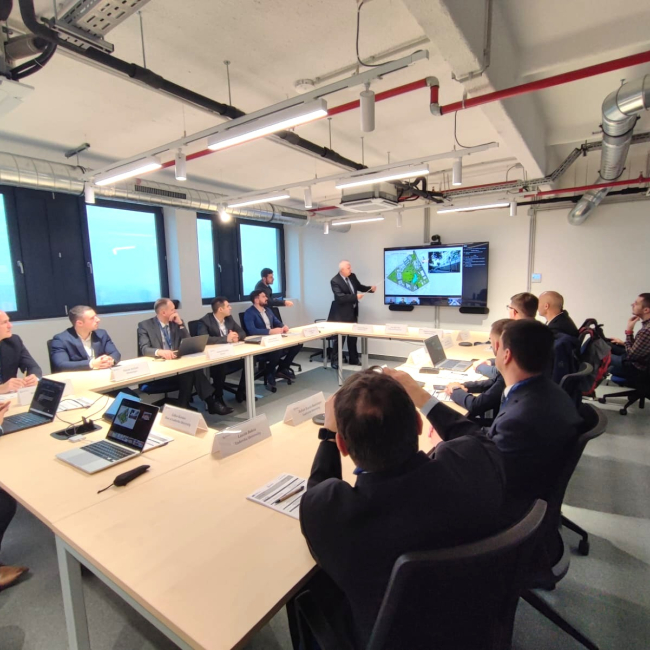
Building on the activities implemented in the Western Balkans in the fight against organised crime and terrorism, the Western Balkans Partnership against Crime and Terrorism (WB PaCT) project, has launched the first accredited CEPOL training in collaboration with Ludovika University of Public Service (LUPS) in Hungary. Accredited trainings like this enhance recognition and provide law enforcement professionals with high-quality, standardised education.

The International Cooperation Unit (ICU) accreditation initiative is a pilot programme to strengthen the capacities of law enforcement services in key non-EU partner countries by participating in Train-the-Trainer courses. Cooperation with Ludovika University will ensure that ICU training aligns with academic standards,” said Alexandru Niculiţă, Head of ICU.
The curricula, developed in partnership with Ludovika University of Public Service, will follow key priorities identified by the Operational Training Needs Assessment and aligned with the EMPACT priorities, reflecting an evidence-based response to operational challenges.
The course that took place in Budapest from 24 to 28 March is part of WB PaCT’s Cyber-attacks Regional Training Cycle and falls under the Train-the-Trainer phase. Designed as a multi-phase learning process, the training cycle combines self-paced online learning with in-person sessions to deepen participants’ expertise. In its final stages, the programme focuses on equipping participants with the skills needed to train peers within their own organisations.
The Head of ICU added:
With the aim to equip law enforcement professionals with the skills to deliver targeted training in the cybercrime domain, WB PaCT develops a sustainable, long-term impact by creating a network of trainers who will be able to cascade the knowledge they gained on a regional level. Today, we have reached a milestone toward this goal.
This cascading model supports knowledge transfer at national and regional levels, while reinforcing the long-term sustainability and impact of CEPOL’s training efforts.
Related Projects

About WB PaCT
CEPOL, together with Europol, implements the Partnership against Crime and Terrorism project in the Western Balkans (WB PaCT) which aims to enhance the capacities of the authorities in the Western Balkans to fight organised crime and terrorism, including preventing and countering violent extremism by enhancing cooperation within the region and with the EU. For more information, please visit the project page.


