


 News
NewsAnti-fraud intelligence analysis: OLAF and CEPOL train 27 law enforcement officials


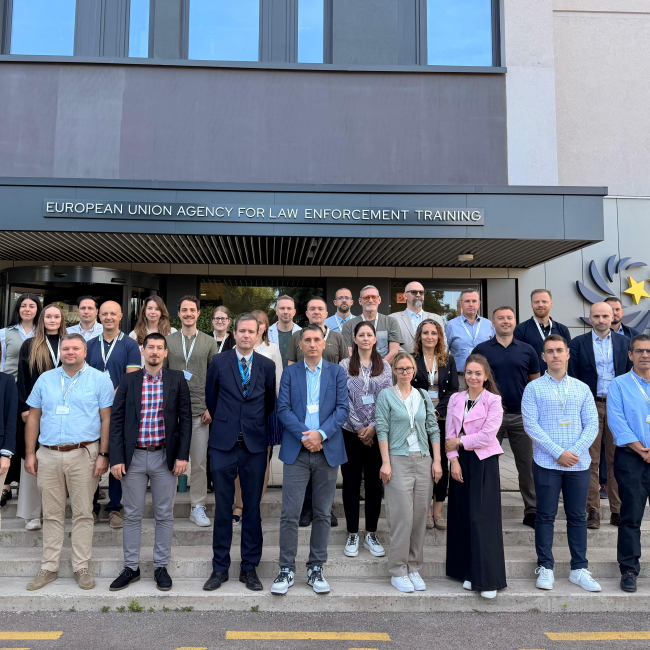
From 8 to 12 June 2026, in partnership with the European Anti-Fraud Office (OLAF) , CEPOL delivered the fourth edition of its flagship training activity on anti-fraud intelligence analysis. By enhancing analytical capabilities and promoting a common understanding of emerging threats, this training contributes to the protection of the financial interests of the European Union and its Member States.
Building on the experience of previous editions and incorporating participant feedback, the curriculum is continuously reviewed and updated to reflect the evolving fraud landscape, technological developments, and operational needs across Europe. The course, designed as a hands-on, practice-driven training, aims to strengthen the capacity of law enforcement and anti-fraud analysts in preventing, detecting, analysing and investigating fraud through advanced intelligence and criminal analysis techniques.
A total of 27 operational intelligence analysts from 18 Member States, as well as representatives from the European Public Prosecutor's Office (EPPO) and Europol specialising in serious organised crime, financial investigations, and anti-fraud operations took part in the activity.
Combining practical exercises with technical instruction, the programme showcased modern analytical methodologies and innovative tools used in fraud detection and investigation. Participants examined a wide range of fraud schemes and criminal business models affecting EU funds and revenue. They learned about the EU anti-fraud architecture, discussed operational challenges encountered in cross-border investigations, and exchanged best practices on intelligence-led approaches to detecting and disrupting complex fraud networks. The programme also provided a valuable platform for networking and fostering closer cross-border cooperation among practitioners from different jurisdictions and institutions.
A distinctive feature of this year's edition was the emphasis on open-source and freely available solutions. Furthermore, recognising the importance of applying AI tools in analytical work, the programme also included a practical introduction to deploying an offline small language model (SLM) on a standard desktop workstation. Participants explored potential operational use cases, as well as AI prompting techniques, optimisation strategies, and considerations related to privacy and responsible use.
The course was met with unanimously positive feedback as participants underscored its value in demonstrating the critical role of criminal analysis in tackling serious organised crime and protecting public finances.
Related Tags
EMPACT training activity

Combatting new forms of organised crime requires more cooperation between police and gendarmes, customs officers, border guards, judges, and prosecutors. EU institutions, agencies and Member States work together to tackle organised and serious international crime through a permanent and key instrument: the European Multidisciplinary Platform Against Criminal Threats (EMPACT).
CEPOL plays a crucial role in the EMPACT mechanism through the provision of specialised training and the identification of training needs within each common security threat. Every year, CEPOL provides a comprehensive training package for each common EU crime priority consisting of onsite, online and exchange training activities.
Check more of CEPOL's EMPACT training activities here.


