


 News
NewsCEPOL and Europol strengthen strategic crime analysis capacities in the Western Balkans through EU-SOCTA training


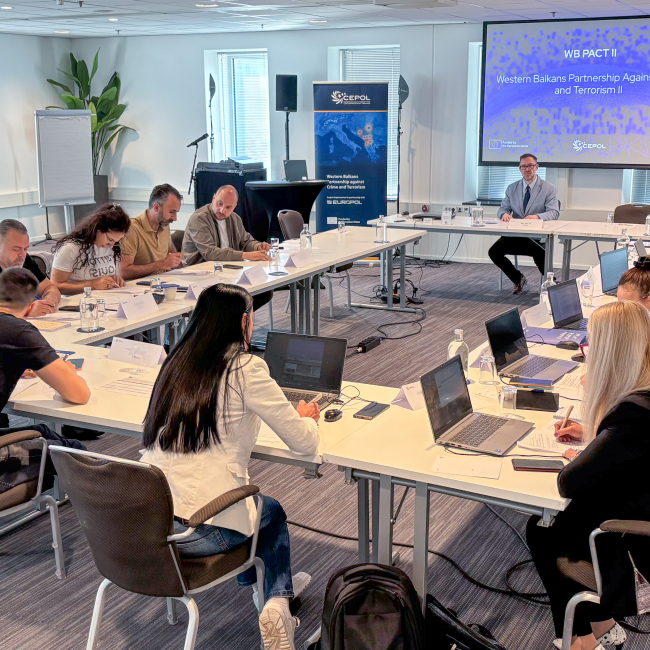
Law enforcement officials from the Western Balkans gathered in The Hague from 18 to 22 May 2026 for a specialised training activity on the EU Serious and Organised Crime Threat Assessment (EU-SOCTA) methodology, organised by CEPOL and Europol under the WB PaCT project. The activity aimed to strengthen participants’ ability to conduct strategic analysis of criminal threats and to align threat assessment methodologies at the beneficiary level with those used at the EU level, promoting consistent and harmonised analytical approaches.
Throughout the week, participants explored the key principles underpinning strategic analysis, including the distinction between operational and strategic analysis and the role of intelligence-led assessments in supporting decision-making. The main focus of the training was exploring the EU-SOCTA methodology in detail, the key tool for priority-setting in the fight against organised crime on the EU level.

“The course highlighted the importance of strategic analysis, practical cooperation and cascading knowledge to strengthen a common understanding and assessment of serious and organised crime threats,” said Georgios Germanos, Police Major, Senior Cybercrime and Cybersecurity Expert at the Hellenic Police, who contributed to the training.
The activity forms part of a broader learning cycle under the WB PaCT project aimed at strengthening long-term analytical and training capacities across the region. Follow-up sessions, mentoring and knowledge-sharing activities will support participants in transferring expertise at the beneficiary level and contributing to the development of more sustainable institutional capacities.
Under WB PaCT, CEPOL and Europol continue to support authorities in the Western Balkans in strengthening cooperation against organised crime and terrorism. By promoting closer regional cooperation and more coherent analytical approaches, the project contributes to more coordinated responses to security threats affecting both the region and the European Union.
Related Projects

Related Tags
About WB PaCT
CEPOL, together with Europol, implements the Partnership against Crime and Terrorism project in the Western Balkans (WB PaCT), which aims to enhance the capacities of the authorities in the Western Balkans to fight organised crime and terrorism, including preventing and countering violent extremism by enhancing cooperation within the region and with the EU. For more information, please visit the project page.


