


 News
NewsCybercrime simulation strengthens cross-border cooperation in the MENA region


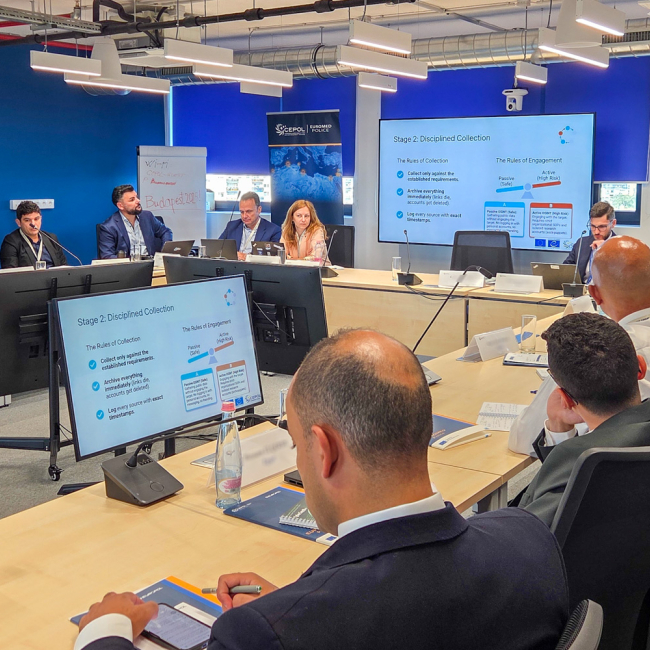
Cybercrime investigations increasingly depend on authorities being able to secure digital evidence and cooperate effectively across borders. To help strengthen these capabilities and support international cooperation in the Middle East and North Africa (MENA) region, CEPOL, through the EUROMED Police project, and the Council of Europe’s CyberSouth+ project organised a joint cybercrime simulation from 24 to 28 August 2026 at CEPOL’s headquarters in Budapest, Hungary.
Designed as a highly interactive exercise, the simulation brought together representatives of law enforcement authorities, prosecutors, judicial authorities and financial intelligence units. Working in mixed teams, participants responded to an evolving cybercrime case that combined technical and financial investigation.
Particular attention was given to international cooperation and to the role of the Budapest Convention on Cybercrime in supporting lawful and effective cross-border investigations. By working through the case with and without the Convention’s cooperation mechanisms, participants explored the practical challenges of obtaining evidence across jurisdictions and the value of common procedures for facilitating timely cooperation.

“Bringing together participants from across the MENA region added real value by enabling an exchange of approaches and operational experience, particularly in the areas of financial intelligence and cross-border cooperation. I left with a stronger understanding of the technical and procedural aspects of cybercrime response, as well as useful regional contacts for future collaboration,” said Robert Kanaan, Financial Intelligence Unit, Special Investigation Commission, Lebanon.
The simulation contributed to EUROMED Police’s broader efforts to strengthen practical cybercrime capabilities and cooperation in the MENA region. By supporting closer coordination between partner-country authorities and their international counterparts, the activity helped reinforce more effective responses to increasingly complex cross-border cybercrime cases.
Related Projects

Related Tags
About EUROMED Police
The EUROMED Police project aims at enhancing the capacity of the Southern Partner Countries to fight serious and organised crime and to strengthen strategic cooperation between national law enforcement authorities in Southern Partner countries, as well as between Southern Partner countries, EU Member States and EU Agencies. Find out more about the EUROMED Police project here.


