


 News
NewsFrom airports to cyber labs: how bilateral exchanges strengthen action against organised crime


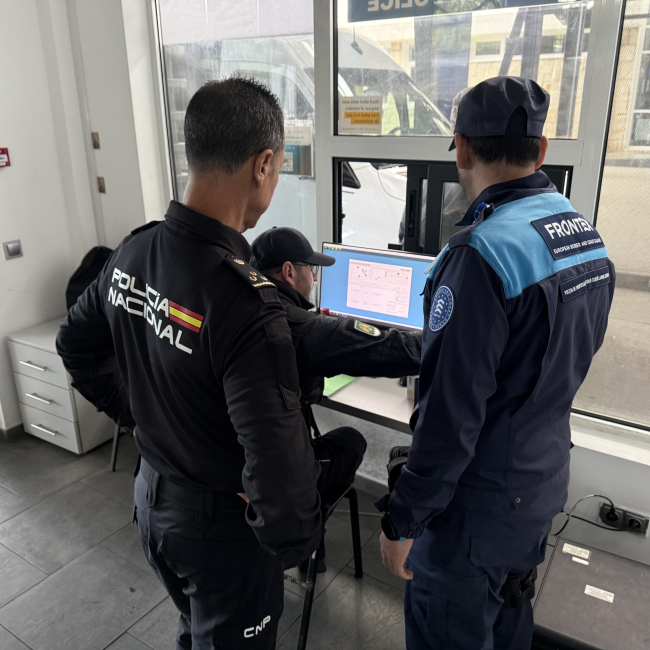
Law enforcement cooperation is not always forged in meeting rooms. Under the CEPOL International Cooperation Exchange Programme, it often starts in control rooms, laboratories, border crossings, or investigative offices, places where daily work unfolds.
In 2025, a total of 12 bilateral exchange visits, implemented under the TOPCOP project, brought practitioners from EU Member States and Eastern Neighbourhood countries into each other’s working environments. Rather than following a set agenda, participants observed how cases are handled in practice and compared investigative approaches.
Inspired by the Erasmus+ model, this programme pairs professionals, allowing them to work side by side. This peer-to-peer approach creates space for open professional dialogue and practical learning across different thematic areas, laying the foundations for effective cooperation against organised crime.
From experience to impact
Across the TOPCOP framework, exchanges addressed a wide range of organised crime threats, including migrant smuggling, drug trafficking and cybercrime. Activities covered both operational and technical domains, from border control and investigative coordination to laboratory-based forensic analysis and digital investigations. By placing participants directly in operational environments, the programme allowed practitioners to observe how counterparts approach investigations and coordinate across services in real working conditions.
A key outcome of these exchanges is that the impact reaches the institutional level, with participants identifying concrete ways to adapt methods and update internal practices. As Anzur Mkrtchyan, from the National Bureau of Expertises of Armenia, noted:

“The knowledge and technologies obtained through the programme will directly contribute to strengthening our scientific and methodological capacity and to aligning our forensic system with EU standards.”
Taken together, these experiences demonstrated how peer-to-peer exchanges can translate individual learning into broader operational and institutional benefits.
Learning that goes beyond the exchange
While each exchange is time-bound, its effects are not. The professional relationships established and the insights gained continue to shape how participants approach cooperation long after they return to their home institutions.
In this way, the CEPOL International Cooperation Exchange Programme supports TOPCOP’s broader objective: fostering sustainable cooperation that enables law enforcement authorities to respond more effectively to organised crime in an increasingly interconnected operational environment.
Related Projects

Related Tags
Interested in taking part in an international law enforcement exchange?
Applications for the CEPOL Exchange Programme 2026 are now open. Through the International Cooperation Exchange and Mentoring Programmes, law enforcement officials can participate in professional exchanges under TOPCOP and other CEPOL international cooperation projects. The deadline for applications is 8 March 2026.


