


 News
NewsEMISA network strengthens counter-terrorism cooperation through joint activities and strategic planning


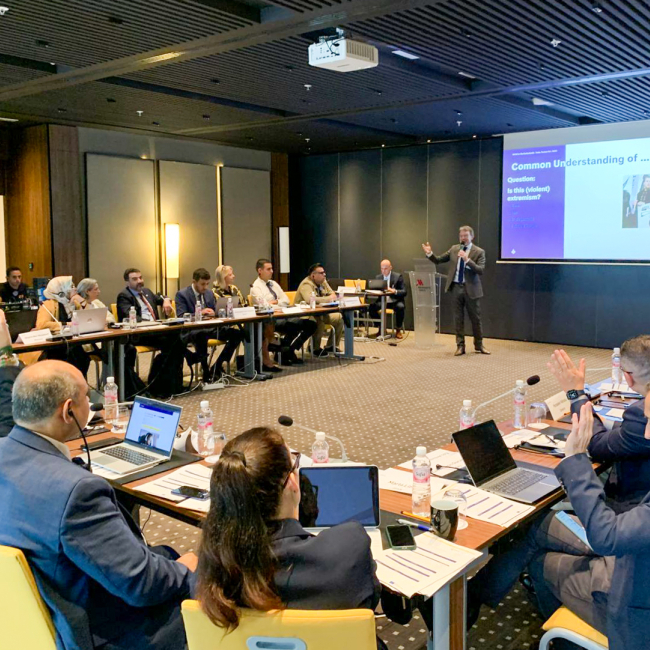
Over October and November 2025, the Enhanced Mechanism for Information Sharing and Analysis (EMISA) network brought together counter-terrorism experts from EU Member States and partner countries in a series of activities and its annual co-chairs meeting.
In this context, the recent activities illustrated how diverse thematic areas can be brought together. On 14–16 October, two EMISA working groups convened in Tunis for a joint seminar on cooperation as a tool in countering and preventing violent extremism, further reinforcing the importance of multi-agency collaboration in mitigating radicalisation risks. A month later, on 10–14 November, representatives of another two working groups met in Vienna for a workshop on artificial intelligence and hybrid threats. The discussions focused on the growing convergence between terrorism, organised crime, and vulnerabilities affecting critical infrastructure. Together, these activities demonstrated the added value of the EMISA network as a platform where experts can address cross-cutting challenges collectively and translate shared insights into practical cooperation.
To complement these thematic discussions, the annual EMISA co-chairs meeting took place on 24–25 November at CEPOL Headquarters in Budapest. Bringing together the co-chairs from all working groups, the meeting provided a strategic forum to review progress made throughout 2025, consider developments in the composition and thematic focus of the working groups, and agree on the work plans and implementation schedules for 2026.
Established by CEPOL through the Counter-Terrorism Information Exchange and Criminal Justice Responses (CT INFLOW II) project, EMISA serves as a key platform for strategic exchange between counter-terrorism practitioners. The network operates through eight working groups that address specific areas of terrorism and violent extremism, supporting a more harmonised understanding of threats and enhancing partners’ capacity to exchange information and develop coordinated responses.
Related Projects

Related Tags
About CT INFLOW
CT INFLOW (Counter-Terrorism Information Exchange and Criminal Justice Responses) aims to contribute to preventing and disrupting terrorist networks and the activities of recruiters to terrorism, cutting off terrorist funding, and bringing terrorists to justice, while continuing to respect human rights and international law. Read more here.
About the EMISA network
The Enhanced Mechanism for Information Sharing and Analysis (EMISA)network is composed of 8 working groups focused on specific counter-terrorism and extremism areas to bring together EU and MENA specialists from the respective national services and authorities, to exchange expertise at strategic level. Further information is available in the EMISA network factsheet.


