


 News
NewsEMPACT training enhances capabilities in crypto-asset investigations


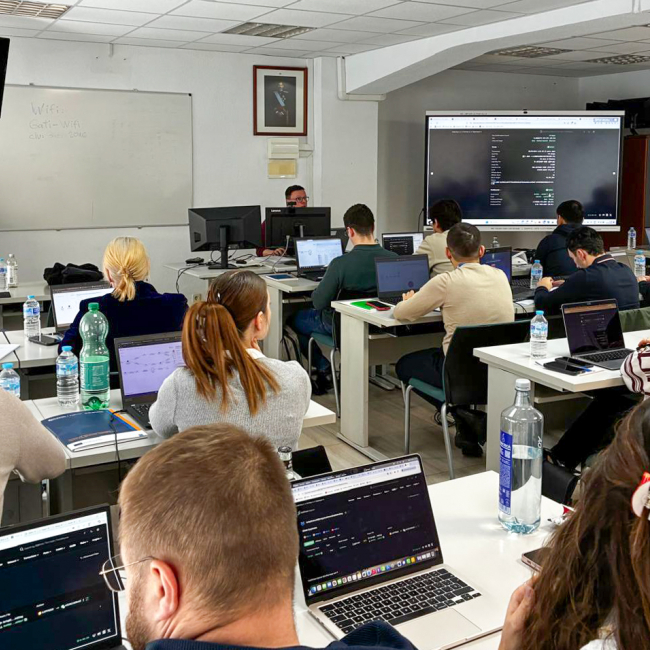
As the criminal use of crypto-assets continues to expand, organised crime groups increasingly rely on specialised intermediaries and facilitators. These actors combine conventional money-laundering methods with sophisticated activity in crypto-asset markets, creating growing challenges for law enforcement across Europe. To respond to this threat, a regional training programme on crypto‑asset investigations was organised to strengthen practitioners’ ability to trace, freeze, seize, and manage crypto-assets linked to serious and organised crime.
The training activity took place from 16 to 20 February at the premises of the Guardia Civil in Madrid, Spain. It was jointly organised by the State Police of Latvia and the European Union Agency for Law Enforcement Training (CEPOL), in close cooperation with the German Federal Criminal Police Office, the Belgian Federal Judicial Police, the Italian Guardia di Finanza, the Irish An Garda Síochána, and Europol’s European Financial and Economic Crime Centre (EFECC). With the support of the TOPCOP project, the activity was implemented under the EMPACT Most Threatening Criminal Networks and Individuals (MTCNI) priority, which includes the criminal use of crypto-assets within operational action 4.1.
Over five days, participants from EU Member States and Eastern Partnership countries reinforced their understanding of the crypto‑asset ecosystem and gained practical skills for financial investigations involving digital assets.

“Taking part in this activity strengthened my ability to identify and analyse crypto-assets in financial investigations and deepen my understanding of cryptocurrency as an asset class. I am taking home practical tools, enhanced blockchain analytics skills, and stronger connections with European counterparts. This will directly support Ukraine’s capacity to tackle crypto-related crime more effectively,” said Mykola Krasenets, Security Service of Ukraine.
The programme combined expert lectures, case studies, interactive discussions, and hands‑on exercises to help practitioners translate theoretical knowledge into effective operational practice. Delivered by experts from the Belgian Federal Judicial Police, German Federal Criminal Police Office, Hungarian Police, Spanish Guardia Civil and National Police, and Europol EFECC, with overall coordination led by the State Police of Latvia, the course emphasised peer exchange and collaborative problem-solving.
Related Projects

Related Tags
EMPACT training activity
Combatting new forms of organised crime requires more cooperation between police and gendarmes, customs officers, border guards, judges, and prosecutors. EU institutions, agencies and Member States work together to tackle organised and serious international crime through a permanent and key instrument: the European Multidisciplinary Platform Against Criminal Threats (EMPACT).
CEPOL plays a crucial role in the EMPACT mechanism through the provision of specialised training and the identification of training needs within each common security threat. Every year, CEPOL provides a comprehensive training package for each common EU crime priority consisting of onsite, online and exchange training activities.
Check more of CEPOL's EMPACT training activities here.
About TOPCOP
The Training and Operational Partnership against Organised Crime (TOPCOP) project continues to support Eastern Partnership countries in their fight against organised crime. The project aims to further enhance operational effectiveness and joint efforts between the Eastern Partnership and the EU, strengthening the strategic and operational cooperation across the region to address criminal threats. For more information, please visit the project page.


