


 Partners News
CEPOL in the fight against Organised Property Crime committed by Mobile Organised Crime Groups

Organised Property Crime (OPC) committed by Mobile Organised Crime Groups (MOCGs) represents a current and major threat to all Member States. Most crimes perpetrated are perceived as small-scale when reported and investigated in isolation at local level. These crimes include many types of offences, including but not limited to: organised burglaries/thefts; armed robberies; vehicle and motorboat thefts; cargo thefts; non-ferrous metals thefts (e.g. copper cable).
The scope and range of MOCGs offences is wide and sometimes linked with Treatment of Human Beings (THB), tax frauds or firearms. OCGs are very active and keen on property crimes due to the low punishments and the wide diversity of crimes.
OPCs committed by MOCGs is taken very seriously, and since 2011 there are measures within the framework of a “ European Multidisciplinary Platform Against Criminal Threats (EMPACT)” (Belgian Federal Judicial Police as driver and French Gendarmerie Nationale/OCLDI as co-driver) to combat this type of crime. Additionally, the SOCTA (S erious Organised Crime Threat Assessment) report issued by Europol, this area is now one of the priorities of the new EU Policy Cycle 2014-2017.
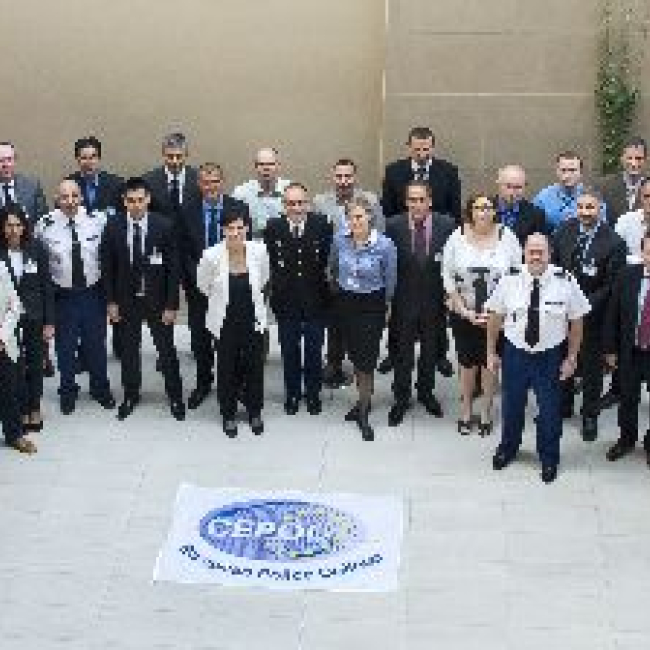
CEPOL course 16/2014 provided a general understanding and overview about “ Organised Property Crime ( OPC) committed by Mobile Organised Crime Groups (MOCGs)” on a European scale. The course attracted 30 participants from 22 Member States and one Associated Country with expert trainers coming from Belgium, France, Romania, United Kingdom, Eurojust and Europol.
Hosted by France from the 23 - 27 June 2014, this training activity was organized by the Central Office for Fighting against Mobile Organized Criminal Groups ( Office Central de Lutte contre la Délinquance Itinérante - OCLDI) and with support from the Gendarmerie Nationale Headquarters, the Gendarmerie Nationale's Judicial Police Department and the French CEPOL NCP team.
The Course Manager, Lieutenant-Colonel François Despres, from the OCLDI encouraged participants to share their national best practices and experiences, and to present possible police responses to tackle, at operational level, this form of criminality and to highlight possible cooperation with EU agencies.
At the end of the activity, all attendees recognised the added value their participation brought to what was already a high quality CEPOL course.


