

 Partners News
Grand Ducal Police delivers CEPOL course on Financial Analysis and Investigation


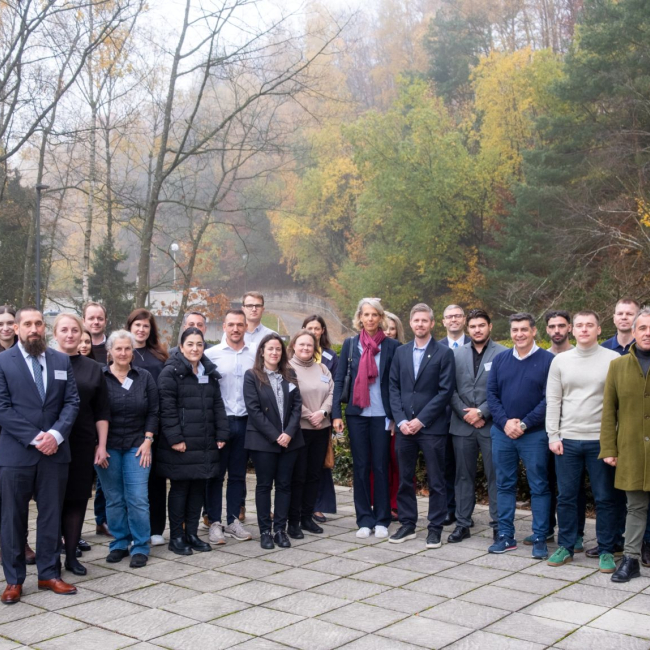
From 10 to 14 November 2025, the Grand Ducal Police organised in Dommeldange, Luxembourg CEPOL activity 11/2025/ONS on Financial Analysis and Investigation.
The main objective of the training was to strengthen participants’ investigative skills, promote best practices for the detection and prevention of money laundering and related financial crimes, and enhance international cooperation in the fight against money laundering and related offenses.
It was developed in close collaboration with the Training Directorate, the Anti-Money Laundering Unit, and the Criminal Phenomena Unit of the Judicial Police Service. Instructors from Luxembourg (3), the United Kingdom (3), the United States (1), and Belgium (9) shared their expertise and practical experience in financial crime investigations with 26 participants from across Europe and several EU agencies and bodies, such as Europol, OLAF and EPPO.
The instructors came, among others, from the following services and organisations:
- Anti-Money Laundering Section of the Judicial Police Service, Grand Ducal Police
- Financial Intelligence Unit (FIU)
- National Crime Agency (NCA)
- Commission de Surveillance du Secteur Financier (CSSF)
- Drug Enforcement Administration (DEA)
- PayPal
- Federal Bureau of Investigation (FBI)
- Belgian Federal Prosecutor’s Office
- Homeland Security Investigations (HSI)
Five main topics were covered during the course:
- Financial Intelligence Gathering – Analysis of information sources, including both open-source and institutional data.
- Money Laundering and Asset Tracing – Identifying and tracing illicit funds through complex financial networks and opaque corporate structures, that are carried out outside the legal banking system.
- Cooperation and Information Exchange – Strengthening cross-border collaboration between EU Member States and international actors, as well as cooperation among various stakeholders active in the fight against money laundering.
- Emerging Financial Technologies – Exploring the impact of digital assets, cryptocurrencies, and fintech innovations on financial investigations.
- Practical Case Studies – Applying investigative techniques to real-world scenarios through group exercises and workshops.
Participants learned how to:
- Analyse typical crime patterns in the context of underground banking and informal value transfer systems (e.g. Hawala, East Asian systems, etc.), and illustrate investigative practices and methods to gather information.
- Recognise money laundering typologies and indicators, including cash- and trade-based money laundering, the use of offshore structures, money laundering in the traditional financial and banking sector, sanctions evasion, and unexplained wealth.
- Understand the role of national competent authorities – including the Financial Intelligence Unit (FIU), police, tax, and customs agencies – as well as national authorities competent for the implementation of prevention and control mechanisms in the financial sector.
- Identify professional crime enablers (such as solicitors, notaries, financial service providers, and trade brokers), who knowingly or unwittingly provide essential support to these forms of money laundering.
- Emphasise the international dimension of financial crime through panel discussions led by international actors that play a key role in combatting such crimes, including the FBI, HSI, and DEA.

Loading data
News from partners: Contributions are directly provided by CEPOL partners and published in this section “as is”. As a result, CEPOL shall hold no responsibility in the accuracy of content provided by the partner. Opinions reflected in these news from partners shall not be deemed to represent CEPOL’s Management or staff’s opinion.
EMPACT training activity

Combating new forms of organised crime requires more cooperation between police and gendarmes, customs officers, border guards, judges, and prosecutors. EU institutions, agencies and Member States work together to tackle organised and serious international crime through a permanent and key instrument: the European Multidisciplinary Platform Against Criminal Threats (EMPACT).
CEPOL plays a crucial role in the EMPACT mechanism through the provision of specialised training and the identification of training needs within each common security threat. Every year, CEPOL provides a comprehensive training package for each common EU crime priority consisting of onsite, online and exchange training activities.
Check more of CEPOL's EMPACT training activities here.


