


Amr El RAHWAN
Cybercrime Forensic Expert
United Nations Regional Centre for Combatting Cybercrime
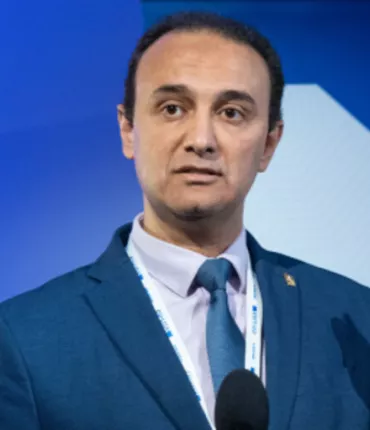
Colonel / Amr El Rahwan is experienced in supporting international law enforcement organizations in solving national security issues. He is considered one of the rare profiles capable of establishing links between the operational, technological, and legal aspects. He provided consultancy to the CEPOL, OSCE, and United Nations and has unique experience in using Artificial Intelligence, interoperability, and OSINT “Open Source Intelligence” in Cybercrime and Countering Terrorism.
He holds a master’s in Cybersecurity and two research papers about using Artificial Intelligence for Interoperability and OSINT to combat terrorism and serious crime, published by FRONTEX (European Border and Coast Guard Agency) and CEPOL (The European Union Agency for Law Enforcement Training).
Amr was based in the Netherlands for 8 years and was a former Police Officer Engineer in Egypt.
Amr now is a Cybercrime Forensics Expert at the United Nations Regional Centre for Combatting Cybercrime in Doha.
Area of Expertise: Cybercrime, Artificial Intelligence, and OSINT.
https://orcid.org/0000-0001-8134-569X
Person-Centric Artificial Intelligence for Facial Recognition and OSINT for Organised Crime Investigations
During daily operations for investigating suspects from High-Risk Criminal Networks (HRCN), law enforcement officials face challenges such as multiple-identity, fraud, lack of cross-border interoperability, and complexity of OSINT “Open Source Intelligence” investigations. These challenges occur because the information systems for law enforcement were implemented in silos, the data is stored in data sources on the national, regional, and international levels, and open data sources and the stored identity-related data vary between biographics, biometrics, and metadata.
Moreover, the mentioned challenges have a negative impact on the time consumed in investigations, accurate identification of wanted suspects, and protection of innocent people.
Finally, the Open Source Intelligence (OSINT) and cybercrime investigation process is not automated, consumes a lot of time, and is overwhelming. When law enforcement officers use methods of OSINT and SOCMINT (Social Media Intelligence) to investigate terrorism and organized crime, it is very difficult to match and link the identity-related data and facial images of the suspects stored among the different data sources.
The research paper argues that different Artificial Intelligence (AI) methods and algorithms, the UMF ""Universal Message Format"" standard, and interoperability could be the optimum solution for the challenges mentioned above. The paper highlights the newly proposed Person-Centric approach for using Artificial Intelligence and the proposed HORUS technical solution of using the European UMF standard for achieving interoperability between information systems to solve the challenges that emerge during investigations, such as multiple-identity, identity frauds, exchanging Cross-Border information, and the complexity of OSINT investigations.
Furthermore, the research paper addresses a practical investigation case to clarify the possibility of training an open-source Artificial Intelligence Large Language Model (LLM) algorithm, such as ChatGPT and Google Gemini, for extracting law enforcement domain-specific information. After training the open-source LLM, the AI model will be capable of linking the different encounters of the same identity among all the data sources and solving the multiple-identity challenges, regardless of the languages of the stored data.
Sessions

Loading data


