


Rui SOUSA-SILVA
Assistant Professor
Centre for Linguistics, Faculty of Arts and Humanities, University of Porto
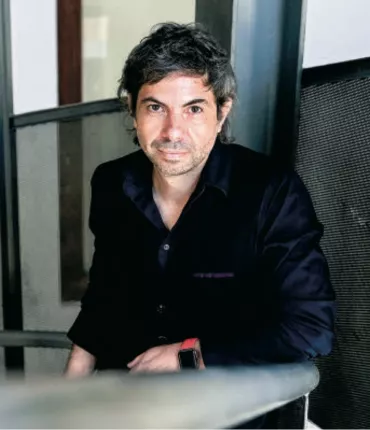
Assistant professor, researcher and Scientific Coordinator of the Centre for Linguistics (CLUP) of the University of Porto. He conducts research in Forensic Linguistics: authorship analysis, language crimes and cybercrime.
He has a PhD in Applied Linguistics-Forensic Linguistics from Aston University (Birmingham, UK). Rui has (co-)authored dozens of articles on (computational) authorship analysis and cybercrime. He is co-editor of The Routledge Handbook of Forensic Linguistics (2 ed.).
Area of expertise: Forensic linguistics, cybercrime, computational linguistics
https://orcid.org/0000-0002-5249-0617
The Power of Language in Disrupting High-Risk Criminal Networks: an evidence-based approach
Over the last decade, the EU has adopted relevant measures to tackle organised crime, e.g. the EU-ACT, the Instrument contributing to Stability and Peace (IcSP), the EU Drugs Strategy (2013-2020), the European Agenda on Security (2015) and EMPACT. However, despite the efforts of the EU, law enforcement agencies and the judiciary to dismantle High-Risk Criminal Networks (HRCN), the recent technological developments and the limitless communication and anonymisation possibilities that they offer have powered new criminal operations, both in the dark and in the surface web (European Union Agency for Law Enforcement Cooperation., 2023). To counter them, law enforcement agencies and the judiciary have focused on investigating network connections of members of (organised) criminal networks (Bright & Whelan, 2020; Broadhurst, 2021; Sierra-Arévalo & Papachristos, 2017; Sousa, 2019).
Nevertheless, the effectiveness of these approaches is hampered by increasingly sophisticated technology, e.g. generative AI, which allows criminals to communicate in any language, while speeding and obfuscating communications among organised crime agents (AUTHOR, 2024). This research builds upon previous forensic linguistics investigations of cybercrime (AUTHOR, 2023) to show the potential of language analysis to counter inorganic and organised (cyber)criminal activities. Although each speaker makes an idiosyncratic use of their language (their idiolect, Coulthard, 2004), members of organised crime groups share identical linguistic features (their sociolect), which distinguishes them from other groups. This identification enables law enforcement agencies to conduct joint investigations to tackle cross-border organised crime, provides the judiciary with robust evidence to convict them, and produces evidence-based knowledge of organised crime threats to prevent and deter them. The presentation concludes by showing how this linguistics evidence-based approach is crucial to dismantling HRCN.
Sessions

Loading data


