


 Activity
E027/2025/EXB Forensic work and crime scene investigation in Croatia, Kosovo, Romania and Spain


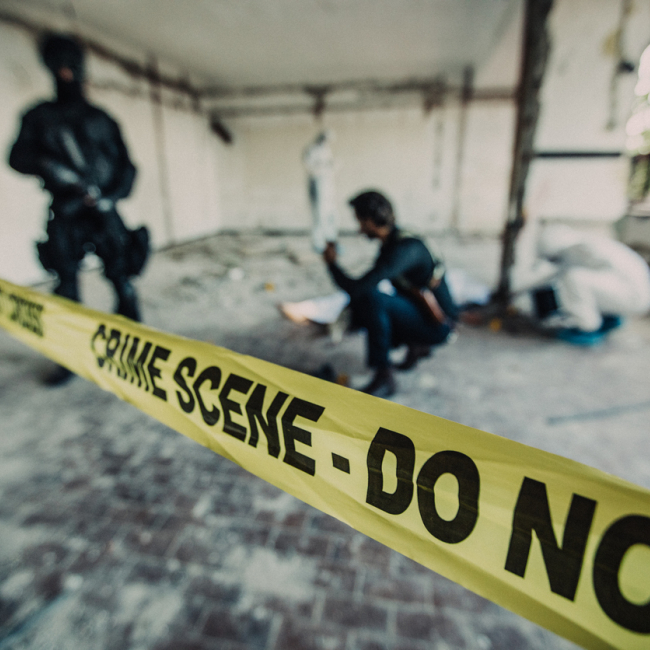
The aim of this training is to inform the audience about process of recovering, gathering and preserving physical evidence from a location where a crime occurred with fundamental purpose to help reconstruct events, identify potential suspects, and ultimately aid in solving crimes in Croatia and in Kosovo*.
By the end of this Exchange-bite, the audience will be able to:
- Enhance the general knowledge about crime scene and traces;
- Strengthen the understanding of technologies that are used;
- Understand the risks at the crime scene;
- Understand the legislative regarding crime scene investigation in Croatia and Kosovo*.
In the second part of the webinar, participants will be informed about comparative practices and innovations in forensic work observed during the CEPOL Exchange Programme 2025 between Romania and Spain. The session focuses on operational workflows, fingerprint identification, digital forensic techniques, and the role of accreditation and training in ensuring high-quality forensic results.
By the end of this Exchange-bite, the audience will be able to:
- Understand the similarities and differences between Romanian and Spanish forensic workflows, particularly in fingerprinting, evidence processing, and report drafting;
- Understand the procedural differences in fingerprint collection and registration, such as the fact that in Spain biometric recording is conducted only for convicted individuals, while in Romania fingerprinting is also applied at the suspect stage, ensuring an early contribution to the identification process;
- Enhance knowledge about the use of automated fingerprint identification systems (AFIS/ABIS) and interoperability in European forensic cooperation;
- Understand the different levels of access and control in AFIS/ABIS and PRÜM searches: in Spain, regional forensic units can perform direct queries which are filtered and validated by the General Forensic Police Headquarters in Madrid, while in Romania, PRÜM searches can only be requested through the National Institute of Forensic Science (INCC);
- Identify how digital management tools such as Bincipol and Kriminis support the efficiency and traceability of forensic activities;
- Recognise the importance of laboratory accreditation and continuous training in maintaining quality standards;
- Recognise the importance of mandatory training prior to the assignment of forensic tasks, as in Spain no expert or technician is authorised to carry out expert examinations or technical findings until completing specific training in the respective field.
*This designation is without prejudice to positions on status, and it is in line with the UNSCR 1244/1999 and the ICJ Opinion on the Kosovo declaration of independence.


