

 Activity
eLesson: Illicit drugs laboratories - Amphetamine


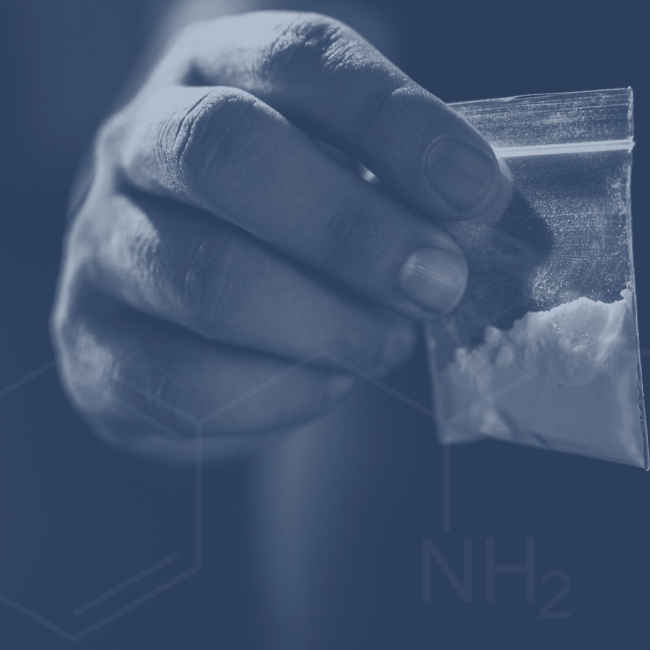
Amphetamine – known by several street names including ‘speed’ and ‘whizz’ – is a synthetic central nervous system (CNS) stimulant that is under international control.
While amphetamine has a limited number of legal uses in the treatment of disorders, such as narcolepsy and attention deficit hyperactivity disorder (ADHD), it is also illegally manufactured on a large scale in the European Union (EU) both for domestic consumption and for export.
Over recent years, the availability of amphetamine in the EU has been increasing. Between 2010 and 2020, the quantities seized rose by 391%, and the number of amphetamine laboratories dismantled in 2020 more than doubled compared to 2019 (78 versus 38). Of those laboratories, 44 were in the Netherlands, 13 in Belgium, 12 in Germany, 5 in Sweden and 4 in Poland.
The 2019 EU Drug Markets Report from the EMCDDA and the European Union Agency for Law Enforcement Cooperation (EUROPOL) found that new production methods were resulting in purer amphetamine being released onto the illegal consumer market, although prices remained relatively stable, and that organised crime groups were playing a major role in controlling the logistics chain. According to the 2021 European Union Serious and Organised Crime Threat Assessment (SOCTA), Dutch criminal networks were the leading producers of amphetamine in the EU in 2021 and cooperated with criminal distributors worldwide.
Illicit amphetamine production in the EU has significant adverse effects on human health. For example, more than 8 000 individuals entering specialised drug treatment in Europe in 2020 reported amphetamine as their primary drug, and almost half of them were first-time clients. Amphetamine was also the fourth most common substance reported by clients presenting at European Drug Emergencies Network (Euro-DEN Plus) hospitals for treatment.
Illicit amphetamine production also has major environmental costs, with half of the 46 European cities that provided data on amphetamine residues in municipal wastewater for 2020 and 2021 reporting increases in levels.
The target audience for this eLesson is law enforcement practitioners – including customs officials, forensic experts and judicial authorities.
This eLesson delivers a virtual tour of an illegal amphetamine production facility, detailing: the characteristics of different types of laboratories; the steps involved in synthesis; the chemicals, equipment and materials used; the hazards to watch out for; and the essential safety measures that must be taken by law enforcement officers who discover illicit amphetamine laboratories and/or are involved in investigating and disassembling them.
These topics can be explored by taking the tour and studying the interactive hotspots which comprise photos, explanatory texts and videos. The tour can be taken from any computer or mobile device, and by using virtual reality goggles.
The eLesson also contains a glossary of terms and abbreviations, and a job aid with concrete tips and suggestions for law enforcement officials who encounter suspected illicit amphetamine laboratories.
eLearners can check their levels of understanding of the topic by considering a selection of quiz questions. Upon successful completion of the session, participants will obtain a badge and certificate.
The learning outcomes of this eLesson are to:
- Recall the main steps of amphetamine synthesis.
- Detail the essential chemicals, precursors and equipment used for amphetamine production.
- Name the measures that organised crime groups (OCGs) take to avoid detection, including the equipment used for this purpose.
- List the evidential value of the different traces, accurate and/or misleading labels, notes, used equipment, packaging materials and other artefacts found in illicit amphetamine production facilities for future prosecutions.
- Describe the hazards associated with investigating illicit amphetamine production laboratories and the countermeasures to take when approaching such facilities.
- Explain the safety measures and preventive steps that should be taken by non-specialist law enforcement officers approaching illicit amphetamine production facilities.

Loading data
Related Tags

Details
Time
Organiser
Target audience
The target audience is law-enforcement practitioners – including customs officials, forensic experts and judicial authorities.
Registration:
Enrolment for this eLesson is now open for law enforcement officials on CEPOL's eLearning platform LEEd. ENROL HERE.
(If you are not a registered LEED user yet, read more on how to create an account here.)


